Once a Leak Has Already Soaked a Wall or Floor
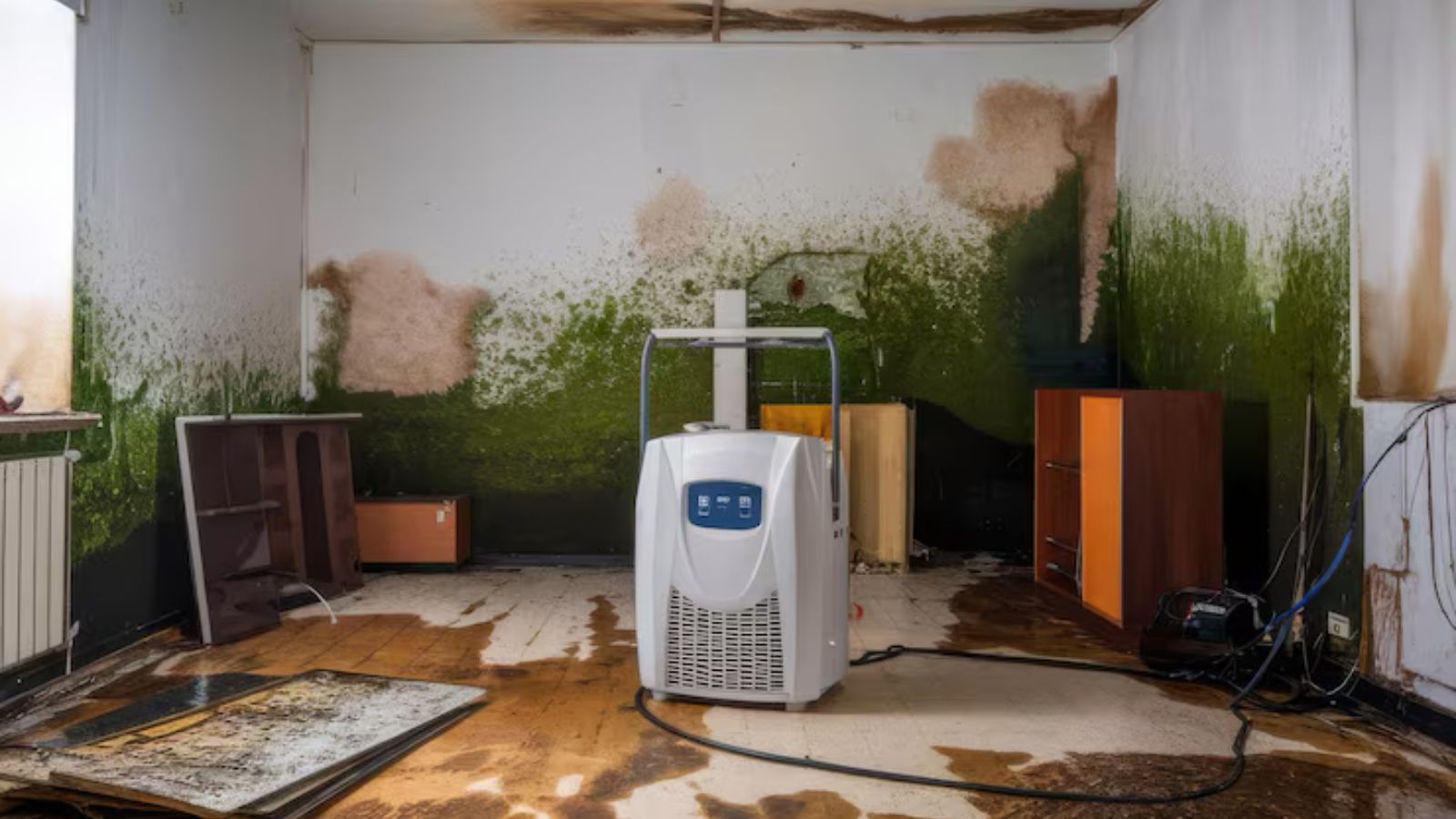
A burst pipe or an overflow that's already gotten into drywall, subfloor, or insulation is a different job from the plumbing repair itself. This is structural drying and mitigation, pulling wet materials, running commercial dehumidifiers, and treating for mold before it starts, not the pipe repair that caused it.
We handle this as its own dedicated service with its own dispatch line, separate from our standard plumbing number, specifically because it's a different scope of work with different equipment and timing.
Emergency Water Damage Response: Act Within Hours
Once water has soaked a wall, ceiling, or floor, the clock is already running. We answer our 24/7 line and coordinate the plumbing repair and the drying response together, so you are not searching for a second contractor in the middle of the night.
Stop the source first if you can, then photograph the damage for your insurance claim before anything is moved. We will tell you what can be dried in place and what has to come out.
While You Wait For Us
- Shut off the water at the main
- Turn off power to wet areas
- Photograph the damage before moving anything
- Call us and describe how far the water has spread
Why Speed Matters More Than Almost Anything Else
Mold can begin developing in wet drywall or subfloor within 24 to 48 hours in a home's normal indoor humidity, which is why the first few hours after water damage matter more than almost any other part of the process.
The faster wet materials are identified and drying equipment is running, the more of the structure is typically saveable rather than needing to be cut out and replaced.
Documenting the Damage for Your Records
We photograph and document the extent of the damage before starting extraction and drying, which gives you a clear record for insurance purposes regardless of how your specific claim is handled.
Our moisture readings are tracked throughout the drying process too, so there's an objective record of when the affected materials actually reached a safe, dry state rather than just a visual guess.
What to Move and What to Leave
Move furniture and rugs off wet flooring where it's safe to do so, and remove items that will stain or transfer color onto wet carpet, but leave structural drying itself to the equipment rather than attempting it with fans alone.
Photograph everything before moving it, since that documentation is genuinely useful both for us and for any insurance claim that follows.
Our Response Timeline
We aim to have equipment running within a few hours of the initial call for active water damage, since the gap between water intrusion and drying equipment starting is the single biggest factor in how much gets saved.
A full assessment, including moisture mapping of affected areas, happens before equipment placement, so the drying plan is based on the actual extent of the damage rather than a guess.
Materials Most Commonly Affected
Drywall, carpet padding, and subfloor absorb water fastest and are the materials most often needing removal rather than drying. Solid wood flooring and tile can frequently be saved with prompt, thorough drying instead.
Serving Westminster and Nearby
Water damage response covers all of Westminster and immediate neighbors, including 80234 near Northglenn and 80260 near Federal Heights, on our dedicated mitigation line.
Water damage calls reach us from the homes near Westminster City Park, the Hyland Hills area, and Church Ranch, and our drying equipment goes to whichever room the water reached first.
We follow up with a final moisture check before closing out any job, confirming affected materials have genuinely returned to a safe baseline rather than assuming based on time elapsed alone.