
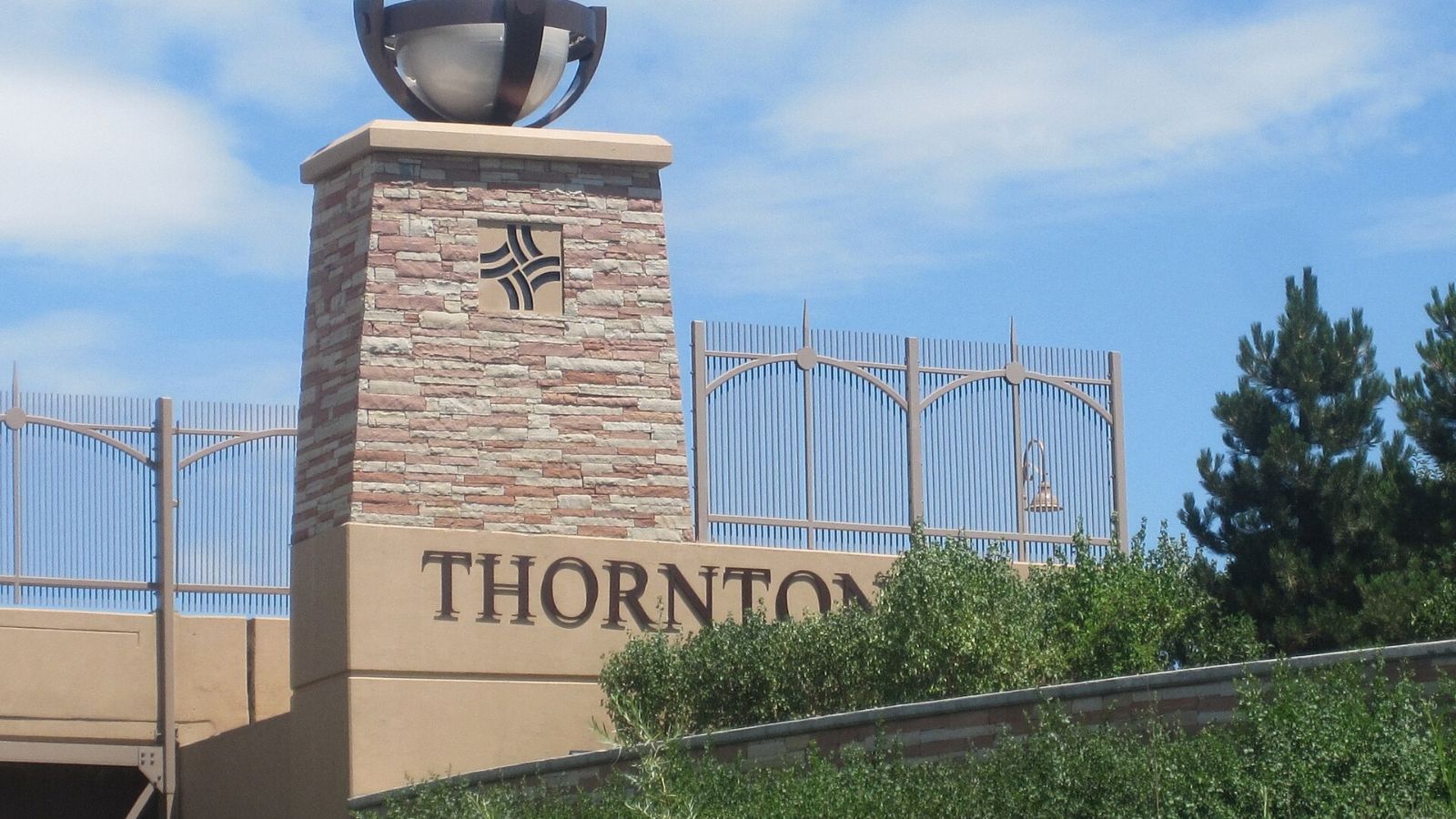
How Thornton Got Its Start
Thornton didn't exist before 1953. Developer Sam Hoffman bought farmland north of Denver and built roughly 300 speculative ranch houses in a matter of weeks, and the city grew fast enough afterward to become one of Colorado's largest suburbs within a few decades.
That fast, uniform original build-out means a real share of South Thornton's homes share the same construction era and the same plumbing weak points, especially original supply lines that are now well past a normal service life.
Thornton's Weather Risk
Thornton sits at roughly 5,268 feet on flat, open ground, and a 1981 tornado that damaged dozens of homes here is a real reminder that the city's weather can turn fast, freeze-thaw winters included.
Frozen and burst pipe calls follow the same seasonal pattern as the rest of the Front Range, with South Thornton's original 1950s housing stock and less-insulated crawl spaces at real risk during a hard cold snap.
Older Core vs. Newer Thornton
Newer sections of the city, Eastlake, Belle Creek, and Hunters Glen among them, run modern PEX and copper with far fewer corrosion issues, and calls there lean toward standard repair and maintenance rather than pipe replacement.
South Thornton's original ranch-house core is where we see the most repiping and slab leak calls, simply because a meaningful share of that housing stock is now approaching or past 70 years old.
A City That Grew Fast
Thornton's population grew from roughly 11,000 in 1960 to well over 100,000 today, one of the fastest growth curves of any city in this part of Colorado, which means the city's housing spans nearly every era from the original 1950s ranch houses through current new-build construction.
That range is part of why we treat every Thornton estimate individually rather than assuming a standard age or pipe material citywide. What's true for an Eastlake home built five years ago tells us nothing about the South Thornton ranch house three miles away.
We ask for the home's approximate build year on every Thornton call for exactly this reason, since it narrows the likely cause list before a technician has even left the shop. A quick note of the neighborhood name alone, South Thornton versus Eastlake, tells us most of what we need to bring on the truck.
Adams County's permitting process governs any Thornton job requiring one, and given how much of the city's original housing is approaching 70 years old, a permitted, inspected repipe or water heater replacement is worth the extra step over an unpermitted shortcut that can complicate a future sale.
Thornton ZIP Codes We Cover
We dispatch across every Thornton ZIP code, including 80229, 80233, 80241, 80602, and pair that coverage with the specific service Thornton calls for most: Repiping & Whole-Home Pipe Replacement. Emergency dispatch reaches all of these around the clock, plus the 80260 corridor just over the Thornton line, since our coverage doesn't stop sharply at a city boundary. If you're in 80229 or 80602 and not sure whether we cover your block, call (303) 552-3896 and we'll confirm on the spot.