
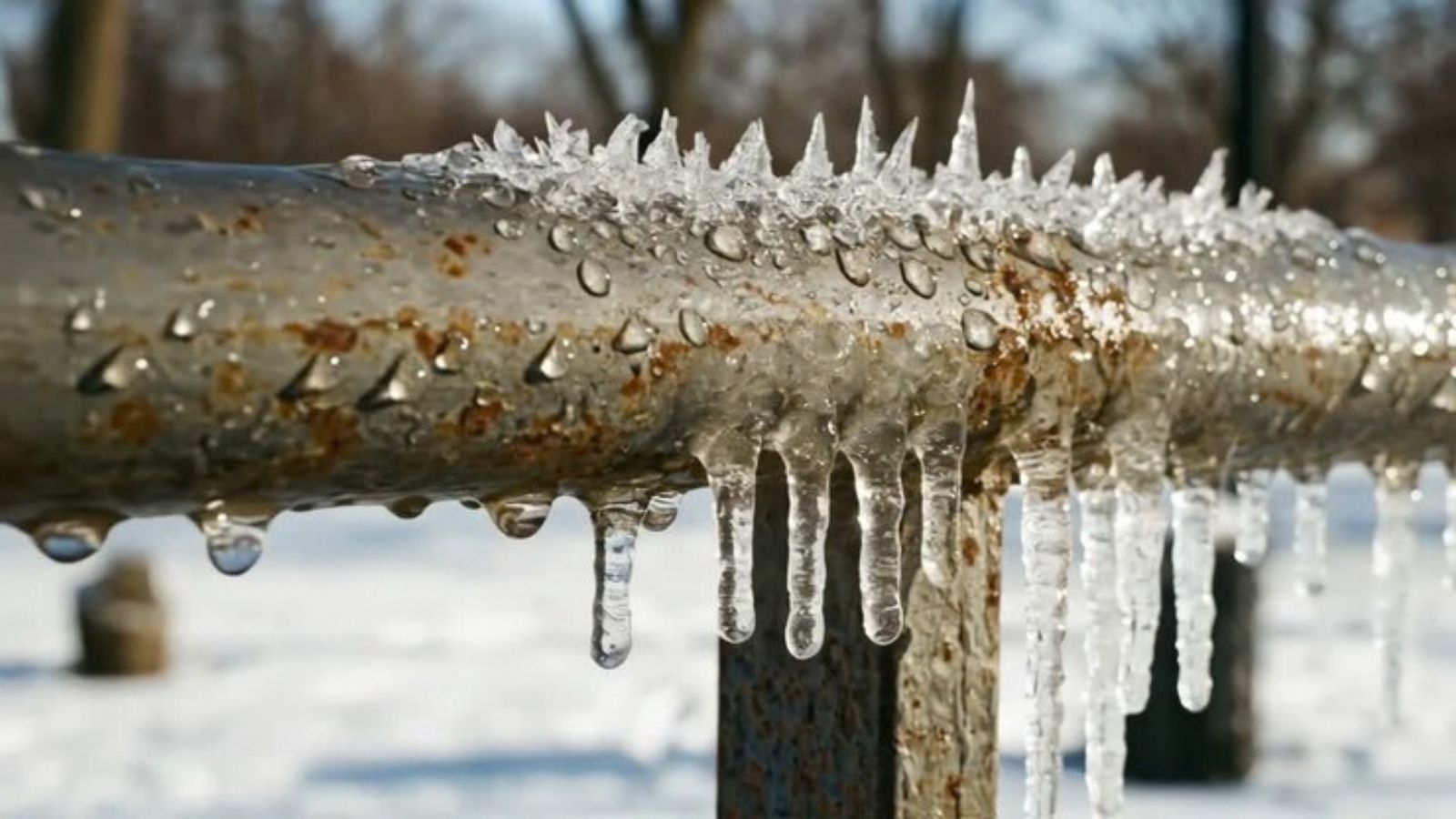
Westminster's Freeze-Thaw Pattern Is the Real Culprit
It's rarely a single brutally cold night that cracks a pipe. It's the repeated freeze-thaw cycle common to the Front Range, where a pipe freezes, expands, and cracks internally, then the thaw that follows is what actually reveals the leak once water starts flowing through the damaged section again.
Exposed pipe in garages, crawl spaces, and unheated additions is the most common location, since these areas don't get the ambient heat that protects pipe running through conditioned living space.
Emergency Frozen Pipe Help: Thaw Slowly and Check for Breaks
A pipe that has frozen solid may already be cracked, and the break often only shows once it thaws. Westminster's guidance says to check for breaks before thawing, to close the shutoff valve first if you find one, and that slow thawing is best.
The city notes that a hair dryer aimed at the frozen section is appropriate and a blowtorch is not. If a pipe has split, or you cannot reach it, call our 24/7 line and we will thaw and repair it safely.
While You Wait For Us
- Find the main shutoff, usually just inside the home where the service line enters
- Open the affected faucet so water can move as it thaws
- Use a hair dryer on a low setting and never an open flame
- Call us if you see a bulge, a crack, or a drip
What To Do the Moment You Suspect a Frozen Pipe
If a faucet has reduced or no flow during a cold snap, shut off the main water supply to the affected area if possible, open the faucet slightly to relieve pressure, and call before attempting to thaw it yourself with an open flame, which is a real fire risk in tight spaces.
We treat suspected frozen pipe as same-day emergency work, not a scheduled visit, since a pipe that's already cracked internally can start leaking heavily the moment it thaws. Any pipe replacement is completed to the Colorado Plumbing Code (IPC), not just patched to get water flowing again.
Which Pipes Are Actually at Risk
Pipe running through an uninsulated crawl space, an attached garage, or an exterior wall without adequate insulation is what actually freezes in a Front Range winter. Pipe inside conditioned living space rarely has a problem even during a hard freeze.
A quick walkthrough before winter, checking exposed pipe in these specific areas, catches most of the risk before it becomes an emergency call during the coldest week of the year.
Preparing for Next Winter Now
Insulating exposed pipe, sealing drafts near crawl space vents, and knowing where the main shutoff is are the three most effective, lowest-cost steps a Westminster homeowner can take before the first hard freeze of the season.
We're glad to do a quick pre-winter walkthrough focused specifically on freeze risk, separate from a general plumbing inspection, if you'd rather have it checked than guess.
If You Suspect a Frozen Pipe Right Now
Shut off the main if you can access it, open the affected faucet slightly, and avoid any open-flame thawing method, then call rather than waiting to see if it resolves on its own.
We treat suspected frozen pipe as same-day priority work throughout the Front Range winter, since the moment of thaw is often when a hidden crack starts actively leaking.
Serving Westminster and Nearby
Frozen pipe calls spike every winter across Westminster, with older homes near 80030 and 80221 and their less-insulated crawl spaces seeing the earliest calls of the season.
Frozen pipes show up first in unheated additions, garages, and crawl spaces, from the older homes of Historic Westminster to the exposed west side of the city near Standley Lake Regional Park.
We also check attic and crawl space insulation levels during a frozen pipe call, since a gap in insulation is often the root cause behind why one specific pipe froze while the rest of the home's plumbing was fine.